
Everything in this blog is what your venue manager won’t ever tell you — from hidden costs to contract traps you don’t feel like it — by someone who experienced all of this.
“I know many times this happened We loved the venue on the visit and Signed within a week & get the invoice — and it was ₹5 lakhs over what they confirmed.”
let me tell you a real case a family in Jaipur, they want a medium-range banquet hall also sign contract with hidden extra charges under phrases like “applicable taxes” and “service surcharge as per season.” according to the venue owner by the time they realized it, they’d already paid the advance.
Booking a banquet hall in India is not just a list — it’s a negotiation skill, a risk management, and sometimes a test of how you handle the pressure. Between managing family suggestions, comparing venues near you, and also make sure it all happens in the planned budget, that’s why you don’t have to skip the critical questions.
My guide is for the couple (or family) who wants go a tension free wedding. No regrets. No problems on the day just enjoy, enjoy, enjoyyy.
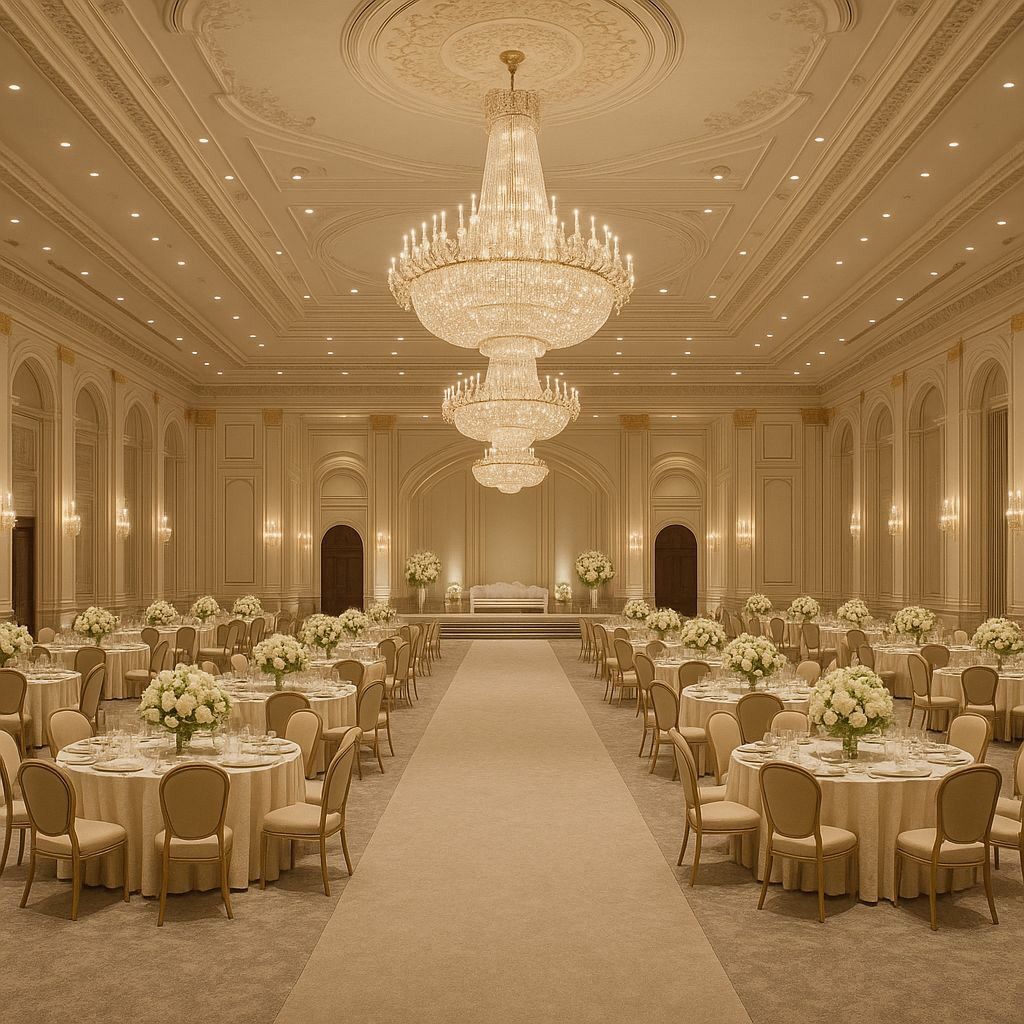
Now i tell you why Choosing the Right Banquet Hall Matters:
The venue is the single most important decision of your entire wedding. Everything else — catering wala, decoration wala, photography wala, even the guest experience — less important then it. Pick the wrong one and you’re battling fot the logistics, inadequate power backup, or parking shortage on the most important day of your life that is your wedding.
More practically:
the venue usually eats 30–45% of your total wedding budget. That’s not a small amount so make sure it will worth it. And because popular venues in cities like Jaipur, Delhi, and Mumbai book 12–18 months in advance during peak season, a late decision often means settling for your third choice which you don’t want.
Insider Point of view:
The venue you choose also indicates something to your guests — and to the vendors you hire. Premium venues attract better vendors who are experience with the space. Budget venues can work beautifully with the right planning, but they require you to do so more coordination yourself.
Types of Wedding Venues in India:
Before you go into the booking process, understand what you’re choosing between. Wedding venues in India mostly fall into these categories:
Standalone Banquet Halls — The most common choice for urban weddings couples. Better flexibility on outside vendors, decoration wala, and catering wala. Usually more under the budget. The drawback is that you coordinate almost everything yourself.
Hotel Banquets & Resorts — All-inclusive in your proposal but more restrictive. Everything is in-house: catering, accommodation, bar. Great for guests traveling from out of station. Pricing can be opaque, and outside caterers are almost always disallowed.
Farmhouses — The farmhouses are popular around Delhi-NCR and Jaipur. Open layouts, great for large guest counts, and more decor freedom. But check power buildings and proximity to residential areas — noise complaints are real problems.
Destination Venues — Think Udaipur’s palace hotels, Goa beachside venues, or the iconic Triyuginarayan Temple in Uttarakhand for couples wanting a sacred Himalayan backdrop. These require far more advance planning — 18–24 months minimum — and a dedicated coordinator on the ground. But when they work, they’re unforgettable. I have a personally best recommendation for the triyuginarayan temple wedding is the aurum hotels and resorts they are best in their work and give you the unforgettable experience in triyuginarayan temple for more detail about it click on Triyuginarayan Temple Wedding page.
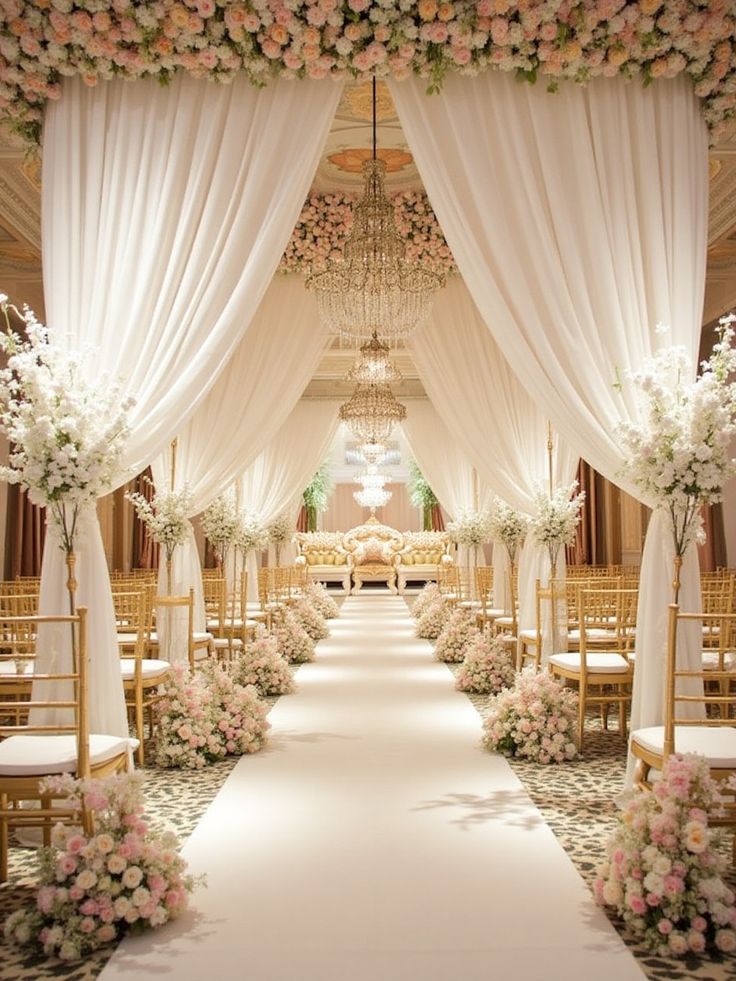
Step-by-Step Guide to Booking a Banquet Hall
Step 1
Define Your Budget — Clearly:
Not a range around just give an actual number. “Around ₹15 lakhs” gets you nothing. Write down: venue cost, catering, decor, AV, and miscellaneous expenses— and decide what percentage the venue alone should take of your wedding budget. Most planners recommend keeping venue + catering within 50% of your total budget.
Also account for GST (18% on banquet services), security deposits, and the “overtime” charge that kicks in past 11 PM in most urban venues.
Step 2
Finalize Your Guest Count — Before Visiting Any Venue:
This is where most families go wrong. They fall in love with a stunning hall that fits 300 guests — and then the final list go up to 450. A rule of thumb: add 15–20% to your expected guest count before shortlisting venues. And be honest with yourselves — Indian wedding means limitless guests.
Also factor in: standing cocktail space vs. seated dinner layouts give very different spaces. Always ask for both numbers.
Step 3
Choose Location & Accessibility:
A venue that looks beautiful on Instagram but is 35 km from the nearest airport is just a nightmare for outstation guests. Think about: proximity to hotels for guests, traffic patterns on weekends, and ease of access for elderly family members. In cities like Jaipur, venues on Ajmer Road vs. the old city can mean 45 minutes of difference during wedding traffic always keep this thing in notice.
Step 4
Shortlist & Visit Venues physically:
Photos lie. Always visit in person — ideally when another event is running, so you can see the space at full capacity, check how the air conditioning handles the crowd, and observe how the staff operates. Walk the parking lot. Check the washrooms (genuinely — they’re a disaster at many mid-range halls). Ask to see the kitchen if outside catering isn’t allowed.
Insider Tip no one tell you:
Visit venues at least twice — once during the day and once in the evening. Some halls that look grand in daylight look small and dull under evening lighting. And vice versa: some budget venues transform with warm lights and draping.
Step 5
Check Availability & Date Flexibility
If you’re fixed on a date and the venue is available — great. But if you have a 2–3 week window, ask which dates have better rates. Off-season (May–July, late February) pricing at the same venue can be 20–35% lower. Also confirm there are no back-to-back events on your day — some venues double-book with events running on opposite sides of a partition wall. This is more common than you’d think.
Step 6
Understand Packages & Inclusions —in detail
The confirmed price rarely includes everything. Standard things that are “extra” at most venues: generator fuel charges, basic stage lighting, welcome drinks, post-event cleanup, and cloakroom staff. Get a detail breakdown — not a package summary — and ask practically : “What is NOT included in this price?” The answer will tell you more than the brochure ever will.
Step 7
Negotiate — Smartly, Not Desperately
Venues expect negotiation. But negotiate on value, not just price. Ask for: complimentary items for the couple, extra setup time the night before, waived corkage fee, or inclusion of a backup generator guarantee in the contract. These additions often cost the venue less than a price reduction but are worth more to you.
If you’re booking during off-peak, your leverage is significantly higher. Don’t waste it on a 5% discount when you could get two extra hours of setup time.
Step 8
Review the Contract — Every Line
This is where most couples zone out. Don’t. Pay particular attention to: refund policy if you cancel (many venues keep 50–100% of the advance), what happens if the venue cancels (often poorly covered), timing restrictions, vendor policy, and noise cutoff. If any clause feels vague, ask for it to be rewritten specifically before you sign.
Watch Out:
“Subject to management discretion” is the most dangerous line in any venue contract. It means they can change terms last minute and you have little recourse. Always push to replace this with specific, measurable and simple language.
Complete Banquet Hall Booking Checklist:
Here’s what to verify before you give any advance to the venue owner. Print this, carry it to venue visits, and don’t skip anything.
Confirmed hall capacity vs. your guest count (seated + standing)
Parking capacity and valet availability
Power backup — dedicated generator, not shared
Air conditioning coverage for all rooms including lobby
Vendor restrictions in writing (caterer, DJ, decor)
Decor flexibility — can you nail into walls, use open flame, etc.
Catering policy: in-house mandatory or outside allowed?
Event timing: exact start, end, and penalty for overtime
Noise cutoff time — especially critical near residential areas
Accommodation on-site or nearby (for outstation guests)
Getting-ready rooms / bridal suite availability
Security and crowd management provisions
Number of washrooms relative to guest count
Complete list of hidden/additional charges (GST, fuel, OT)
Cancellation and refund policy in writing
Cost-Saving Tip:
Booking a Saturday night wedding in December will cost you maximum. A Sunday lunch wedding in January or a weekday evening in late February can save you 15–25% on the same venue — and your guests are often more relaxed at a daytime function anyway.
10 Red Flags You Must Avoid While Booking a Venue
Here’s what most venues won’t tell you — and what their sales team is trained to gloss over.
No written contract or vague clauses — if they say “we’ll sort it out later,” walk away.
Hidden charges not disclosed upfront — generator, GST, OT fees buried in the fine print.
Back-to-back event overbooking — your wedding ends at 11 PM and they’re setting up the next event at midnight.
Poor maintenance — broken AC units, dirty bathrooms, peeling ceilings. If it looks like this during a site visit, imagine the day of.
No backup power guarantee in writing — a verbal promise means nothing when the lights go out during the pheras.
Restrictions not disclosed until after advance payment — suddenly your preferred caterer “isn’t empaneled.”
Pushy sales tactics with urgency pressure — “Three other families are looking at this date right now.” Maybe. Maybe not.
Negative reviews about staff responsiveness — check Google, Justdial, and wedding forums. A sales team can be charming; event day staff may be different.
Inadequate parking for your guest count — 500 guests and 40 parking spots. Do the math.
Zero vendor flexibility with no price justification — forced in-house vendors without competitive pricing are a revenue play, not a quality play.
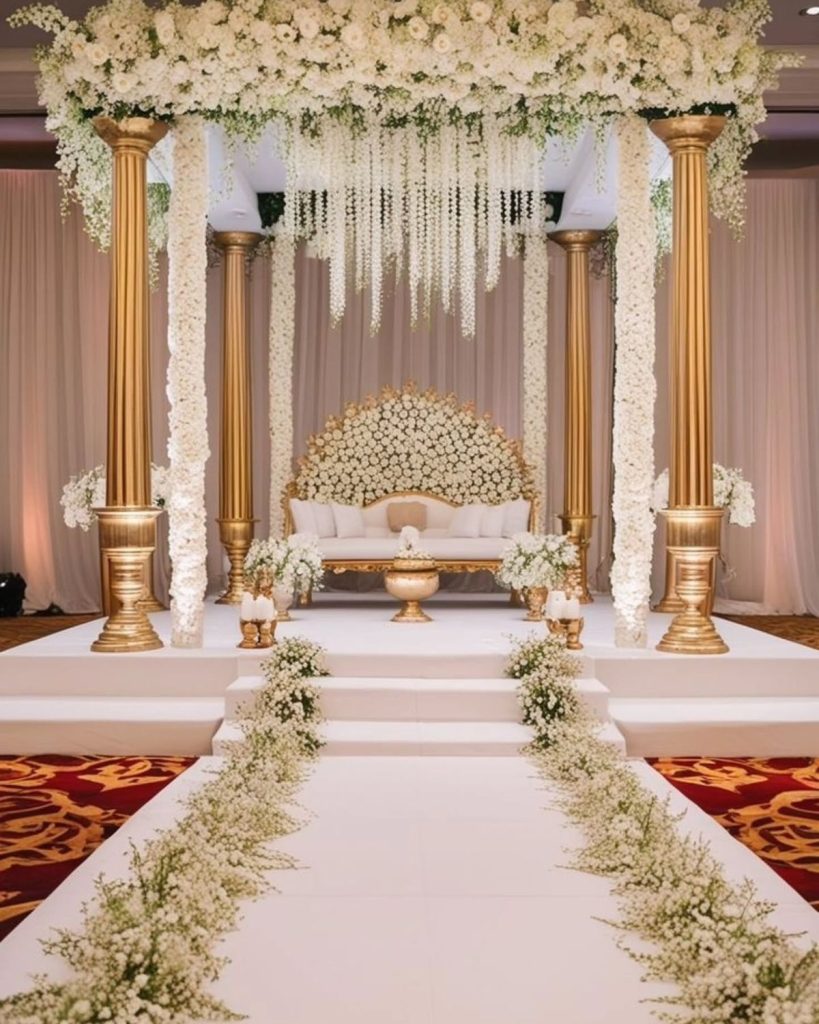
Questions You Must Ask Before Signing the Contract
If I were booking my own wedding venue, I’d carry this list and ask every single question — no exceptions:
Q1. What is the exact seating capacity for a seated dinner vs. cocktail setup?
Q2.What does the final invoice include — and what is explicitly excluded?
Q3.Is the generator dedicated to our event or shared? What’s the switchover time?
Q4.What is the cancellation policy — for both sides? What if you (the venue) cancel?
Q5.Are there any other events booked on the same day in adjacent halls?
Q6.What is the exact timing slot, and what are the overtime charges if any?
Q7.Can we bring our own caterer, DJ, photographer, and decor vendor?
Q8.Is there a noise/music cutoff time? Is it legally imposed or venue policy?
Q9What is the refund policy if guest count drops significantly?
Q10.Who is the designated event coordinator on the day of the wedding — and can we meet them before signing?
Mistakes Couples Make While Booking a Banquet Hall
Booking based on aesthetics alone. A gorgeous hall with poor acoustics, a packed parking lot, and rigid vendor policies is still a bad venue. The look is 20% of the experience; logistics are the other 80%.
Waiting too long. This is the single most common and most expensive mistake. Prime venues in cities like Jaipur, Delhi, and Bengaluru for December–February are fully booked by March–April of that year. Waiting until 6 months out means choosing from whatever is left.
Ignoring the contract because the venue “seems trustworthy.” Trustworthy people have clear contracts. Venues that rely on trust instead of clarity are the ones that cause problems. The contract protects both sides.
Not having a venue visit with the caterer. If you’re using an outside caterer, bring them to the venue walk-through. They’ll spot kitchen access issues, staging logistics, and entry/exit problems that you wouldn’t know to look for.
Pro Tips from Venue Experts : Negotiation Trick
Book Sundays instead of Saturdays. In most markets, a Sunday event runs 10–20% cheaper than a Saturday. Your guests travel on Saturday, are present Sunday, and leave Monday. It often works better for everyone.
Use a competing venue quote as leverage. If Venue A is your first choice but Venue B has offered better terms, let Venue A know. Professional venues will often match or exceed if they want the booking.
Lock the coordinator, not just the hall. Ask by name who your event day coordinator will be. Some venues assign junior staff to complex events because the senior team is managing another booking. Having the right person named in your contract matters.
Off-season isn’t just about cost. May–July weddings often get more vendor attention (everyone’s less busy), better access to premium caterers, and more flexibility from venues. If your date isn’t fixed, consider it seriously.
Final Checklist Before You Sign
Budget confirmed — venue + catering within 50% of total wedding spend
Guest count finalized with 15–20% buffer built in
Visited venue at least twice (day + evening visit)
Line-item cost breakdown obtained (not just a package quote)
All hidden charges identified and included in final quote
Vendor restrictions understood and acceptable
Power backup commitment in writing
Cancellation and refund clauses reviewed
Event day coordinator named in contract
No back-to-back events in adjacent halls confirmed
Online reviews checked — Google, Justdial, and wedding forums
FAQ’s Section
For peak season (October–February), book 12–18 months ahead. Off-season gives you more flexibility at 6–8 months. Destination venues like Jaipur palace properties or Goa resorts should be booked even earlier — 18–24 months is not unusual.
Budget halls run ₹2–10 lakh for the venue alone. Mid-range properties cost ₹10–30 lakh. Luxury venues start at ₹30 lakh. Add per-plate catering at ₹800–₹5,000 per head depending on city and menu.
Generator fuel charges, overtime fees past 11 PM, corkage/bar service charges, parking management fees, décor load-in charges, and GST (18%) quoted separately from the base price. Always ask for a fully loaded invoice upfront.
It depends on the venue. Standalone halls often allow outside caterers (sometimes with a kitchen usage fee). Hotel venues almost always require in-house catering. Always clarify this before paying any advance.
Cancellation and refund policy, timing slots and overtime terms, full cost breakdown, power backup guarantees, vendor restrictions, overbooking clauses, force majeure terms, and who the designated event coordinator will be on the day.
Hotels offer convenience — in-house catering, accommodation, valet — at a higher cost with less flexibility. Standalone halls give you vendor freedom and better pricing but require more self-coordination. The right choice depends on your priorities, not a blanket rule.
Peak season (October–February) offers the best weather but the highest prices and least availability. Off-season (May–July) saves 20–30% on many venues. Shoulder months (March, September) often offer good availability with moderate pricing.